What Led to the Recent Government Shutdown?
The recent government shutdown can be attributed to a series of complex events and circumstances that unfolded in the lead-up to the funding deadline. Central to this situation were significant budget disagreements, political agendas, and looming deadlines that culminated in an impasse. The inability of Congress and the President to reach a consensus reflected a broader issue of partisanship that has increasingly characterized American politics.
At the heart of the shutdown was a dispute over funding allocations. Lawmakers from both parties had divergent priorities, which complicated negotiations. For instance, Democrats often pushed for increased funding for social programs, while Republicans concentrated on fiscal conservatism, advocating for reduced spending. This fundamental clash of ideologies made it increasingly difficult to create a budget that satisfied both sides, leading to a lack of agreement on appropriations legislation necessary to keep the government operational.
Furthermore, significant deadlines played a crucial role in the shutdown. As the end of the fiscal year approached, Congress faced mounting pressure to approve necessary funding measures. The urgency to act became overshadowed by political maneuvering and a reluctance to compromise, which resulted in missed opportunities to collaborate on a viable budget solution.
The roles of Congress and the President in this context are pivotal. Congressional leaders struggled to unite their respective parties, struggling against a backdrop of heightened partisanship. Meanwhile, the President’s position and demands regarding specific funding issues further complicated the negotiation process. The lack of bipartisan support ultimately resulted in a fractured dialogue, rendering the passage of funding bills almost impossible.
The intricate relationship among budget disagreements, political agendas, and the significant deadlines ultimately led to the recent government shutdown, reflecting deeper issues within the current political landscape.
Trump’s Involvement and Statements
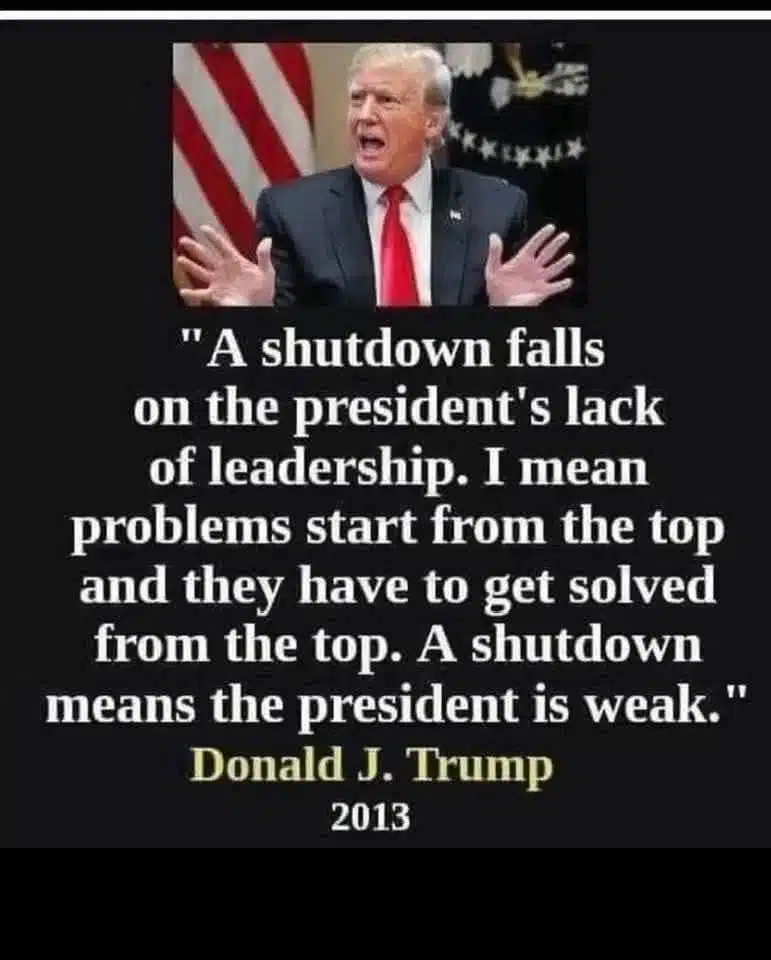
Former President Donald Trump played a significant role in influencing the narrative surrounding government shutdowns during his administration. His statements often highlighted the belief that the responsibility for these interruptions in government services lay squarely with the sitting President. Trump has been quoted numerous times asserting that any government shutdown reflects poorly on the President’s ability to govern effectively, thereby framing the narrative around accountability in the political arena.
During the various government shutdowns that occurred while he was in office, Trump made several public comments that underscored his stance. He often pointed fingers at Democrats, suggesting that their unwillingness to negotiate on contentious issues, such as immigration policy and funding for the border wall, directly led to the impasses. For example, he famously declared in a televised meeting with congressional leaders that he would be “proud to shut down the government” if he did not receive adequate funding for his proposed border security measures. This remark not only highlighted his willingness to embrace the shutdown but also served to shift the blame onto opposition parties, particularly the Democrats.
The implications of Trump’s rhetoric were profound, as it shaped public perceptions of government shutdowns. By attributing blame to his political adversaries, he reinforced a divisive narrative that altered the discourse surrounding responsibility in governance. His comments ignited robust debates concerning the role of the executive branch in maintaining government operations and the underlying motivations for incentivizing such drastic measures. Furthermore, Trump’s take on government shutdowns played a pivotal role in fueling partisan tensions, further complicating the already intricate dynamics of American politics.
Through his comments and actions, Trump significantly influenced the political landscape concerning government shutdowns, prompting discussions that went beyond mere operational impacts to address broader themes of leadership and accountability in government.
Consequences of the Shutdown
The repercussions of a government shutdown extend far beyond the immediate halt of federal operations, producing a myriad of consequences for federal employees, government services, and the economy. During a shutdown, federal workers often face furloughs, resulting in unpaid leave for many employees. This not only affects their financial stability, leading to missed paychecks, but also contributes to a decline in morale among the workforce. Employees on furlough may experience heightened stress as they attempt to manage their personal finances without a secure income source, which could lead to broader issues within the workforce upon their return.
Moreover, the absence of a fully operational federal government disrupts essential services and agencies. Programs and services deemed non-essential may halt, impacting citizens who rely on these for support, including those seeking benefits or health services. The delays in processing applications and responding to inquiries can exacerbate public frustration and diminish trust in government institutions, affecting community well-being.
The economic implications of a government shutdown are significant as well. Nationally, disruptions can undermine public confidence, leading consumers to hesitate in making purchases or investments, which subsequently slows economic growth. Businesses that rely heavily on government contracts may find themselves facing unexpected challenges; the lack of federal spending directly impacts their operations and revenue streams, potentially resulting in layoffs. Additionally, small businesses that provide goods and services to federal agencies may experience cash flow problems during a shutdown, highlighting the interconnectedness of government functions and the broader economy.
In essence, the consequences of a government shutdown echo throughout various sectors, affecting not only those working within the federal government but also the public and economic landscape at large. Understanding these ramifications is crucial for comprehending the broader scope of government operations and their importance to the nation’s stability and growth.
Future Implications and Lessons Learned
The recent government shutdown has raised pertinent questions regarding the long-term implications for fiscal responsibility and government accountability. Examining past shutdowns reveals a pattern of recurring themes, highlighting the necessity for reform in legislative processes to prevent future stalemates. Various government shutdowns have historically resulted in significant disruptions to public services, economic instability, and increases in public dissatisfaction with government efficiency. These consequences underline the urgency in establishing more effective strategies aimed at averting such crises.
One of the crucial lessons learned from previous shutdowns is the importance of bipartisan cooperation. Political polarization often exacerbates tensions, leading to prolonged disputes over budgetary allocations and priorities. The current political climate demands that policymakers prioritize collaboration over partisanship. An approach that fosters dialogue and consensus-building among different political factions is essential for navigating complex fiscal challenges. Hence, implementing mechanisms that enforce regular communication between parties could greatly diminish the chances of future government shutdowns.
Moreover, the ongoing public discourse surrounding government shutdowns reflects an evolving perception among citizens. The increasing frequency of these events may lead to a growing disillusionment with political leaders and their inability to govern effectively. Trump’s comments during and after the shutdown have influenced public opinion, prompting discussions about accountability and fiscal responsibility. With shifting public sentiment, it is imperative that lawmakers recognize their role in restoring trust through transparent governance and ethical fiscal practices. Educating the public on the implications of government shutdowns will be vital for fostering a more informed electorate, ultimately allowing for more effective oversight of government operations moving forward.