
Understanding Free Speech: A Fundamental Right
Free speech stands as a cornerstone of democratic societies, serving to empower individuals to express their thoughts, ideas, and beliefs without undue interference or censorship from government entities or private organizations. Historically, the concept of free speech can be traced back to various philosophical and political movements that prioritized individual liberties over authoritarian rule. In essence, it encompasses not only the freedom to communicate one’s own viewpoints but also the imperative to respect and tolerate divergent opinions.
The existence of free speech facilitates a healthy exchange of ideas, stimulating discussion and innovation. This dynamic is particularly critical in democratic contexts, where a multiplicity of voices contributes to the collective decision-making process. However, free speech is not merely about the unrestrained expression of popular sentiments; it is equally vital for protecting those views that are unpopular or challenge the status quo. This balance ensures that minorities and marginalized groups are not silenced, supporting a vibrant society where all ideas can contend for recognition and acceptance.
To illustrate the necessity of safeguarding diverse opinions, one can examine landmark free speech cases, such as *Tinker v. Des Moines Independent Community School District*, where students wore black armbands to protest the Vietnam War. The U.S. Supreme Court ruled in favor of the students, affirming that students do not lose their free speech rights at school. This pivotal decision highlights the essential principle that free speech protections extend to all individuals, regardless of their setting. Moreover, it exemplifies how the safeguarding of free expression fosters resilience and adaptability within a pluralistic society, allowing for the coexistence of contrasting viewpoints.
As society grapples with contentious issues today, understanding free speech in its broader context remains vital. It is essential not only to advocate for individual expression but also to cultivate an environment where opposing perspectives are respected and debated thoughtfully. A commitment to this principle ensures that free speech endures as a fundamental element of democracy.
MAGA Movement’s Stance on Free Speech
The MAGA movement, characterized by its fervent support for former President Donald Trump, presents a complex approach to the concept of free speech. Proponents of this movement often champion the idea of unregulated expression, asserting that their rights to voice opinions and beliefs should be upheld without restriction. This advocacy for free speech typically manifests as strong opposition to political correctness, perceived censorship by the mainstream media, and any form of regulation they believe infringes on their liberties. The MAGA base frequently utilizes social media platforms, promoting their ideologies and rallying support around various issues under the guise of protecting free speech.
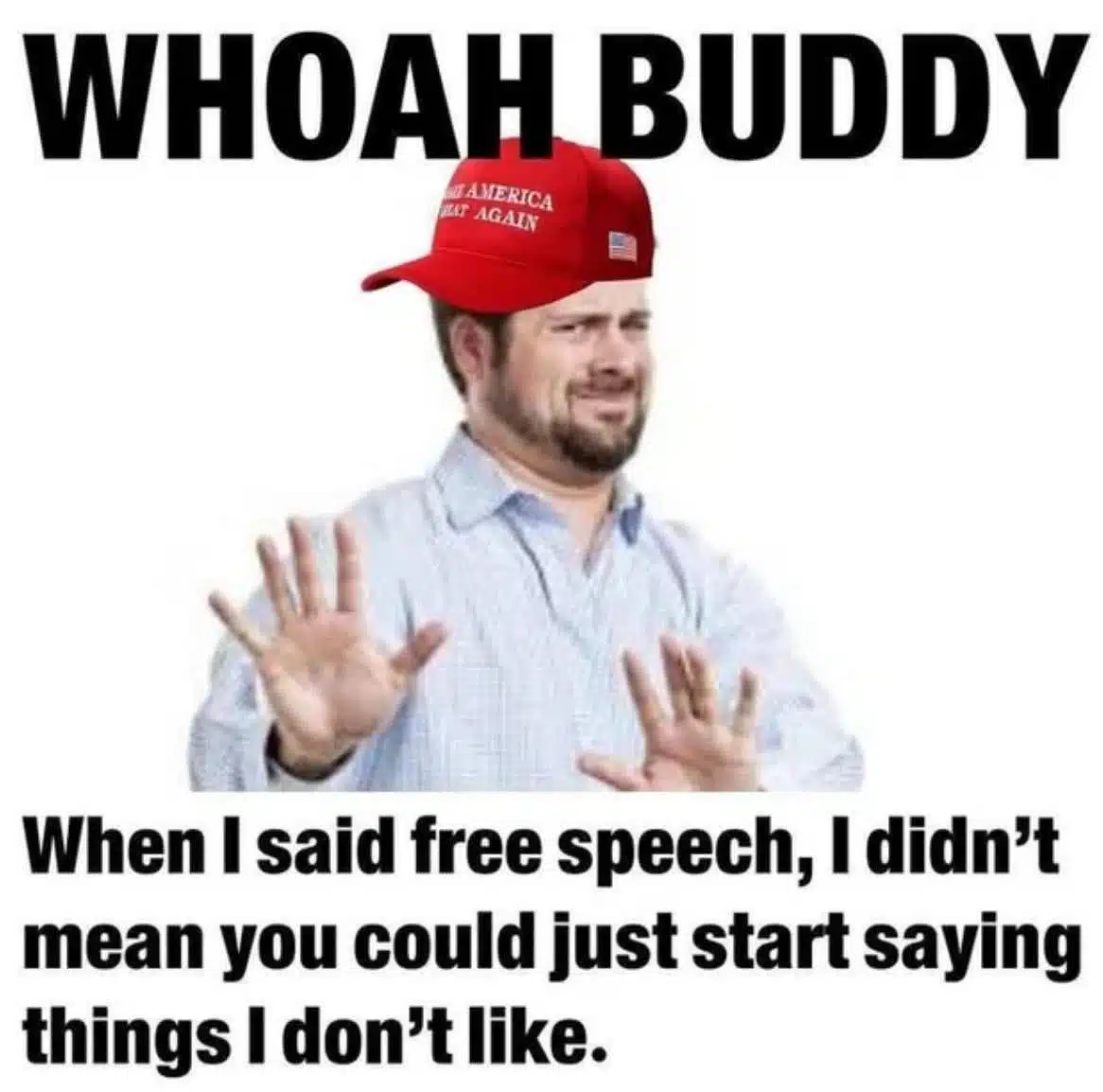
However, this professed commitment to free speech tends to falter when dissenting opinions emerge. Numerous instances illustrate this inconsistency. For example, supporters of the MAGA movement have engaged in campaigns to silence critics, particularly when opposing viewpoints challenge their beliefs. Efforts to discredit media organizations that report unfavorable stories, and endeavors to diminish the voices of anti-MAGA commentators, reveal a contrasting stance on free expression when it threatens their narratives. This selective application raises questions about the authenticity of their commitment to free speech.
Furthermore, within educational and political settings, there have been accounts of MAGA supporters advocating for the dismissal or ostracization of individuals who voice differing perspectives. Instances of intolerance towards professors, speakers, or activists who present anti-MAGA sentiments highlight how the movement sometimes prioritizes its own agenda over the foundational principles of free speech. As a result, this duality raises critical discussions about the true values espoused by this segment of the political landscape. Such a dichotomy is essential to examine, as it exposes the complexities and potentially hypocritical nature of their stance on free speech.
The Call for Censorship: A Double Standard
The MAGA movement has often drawn attention for its fervent advocacy of free speech; however, this stance becomes perplexing when its members are observed calling for the censorship of dissenting voices. A noticeable double standard emerges as these advocates frequently demand the silencing of perspectives that challenge their views, all while proclaiming their commitment to an open dialogue. This paradox highlights emotional reactions that sometimes overshadow rational discourse. For instance, prominent figures within the MAGA community have openly criticized social media platforms for banning or limiting content that promotes their political ideology. Yet, paradoxically, these same individuals have been known to endorse or encourage the removal of content that contradicts their narratives.
One telling example includes instances where MAGA supporters have utilized hashtags such as #CancelCulture to highlight their discontent with perceived bias against conservative viewpoints. During various public events, instances have been documented where speakers or audience members have shouted down opponents or called for their removal from platforms, deeming such actions necessary to “protect” their own speeches. This behavior raises questions about the authenticity of their commitment to free speech. Such emotional appeals underscore the irony of their demands; it becomes evident that the push for free speech is often selectively applied based on alignment with their beliefs.
Furthermore, social media serves as a battleground where these dynamics play out. Posts and comments reflecting the sentiment that opposing opinions should be stifled have gained traction among MAGA advocates, often drowning out genuine discourse. This selective outrage often escapes scrutiny, leading to a broader conversation about whether the movement genuinely believes in free speech or adheres to a selective interpretation. As evident from these patterns, the MAGA call for free speech must grapple with the implications of their calls for censorship, inevitably revealing a clear inconsistency in their narrative.
The Consequences of Selective Free Speech
The practice of selective free speech, where certain groups are afforded more leeway to express their opinions while others face constraints, poses significant consequences for society. This selectiveness can lead to increased division and polarization, creating an environment where people are pitted against one another based on their ideological beliefs. When a particular perspective is amplified while others are muted, a false narrative emerges, fueling misunderstanding and hostility among different factions. Such a scenario can lead to an “us vs. them” mentality, eroding the necessary discourse that upholds democratic values.
Moreover, selective enforcement of free speech principles may inadvertently stifle innovation and progress. Diverse ideas are crucial in fostering a society that thrives on creativity and problem-solving. When only certain viewpoints are validated, the potential for groundbreaking discussions is severely limited, diminishing the richness of public dialogue. The consequence is not merely the loss of particular ideas but also the suppression of critical thinking and the exploration of alternative solutions to societal challenges. In a democratic society, it is essential to allow all voices to be heard, ensuring that even the most unpopular opinions are given the opportunity to challenge mainstream thought.
Cultivating an inclusive environment where each perspective is respected reinforces the principles of free speech. It is paramount to engage in conversations that consider various viewpoints—this does not equate to uncritical acceptance but rather an acknowledgment of the right to hold differing opinions. Each political affiliation, including those often labeled as “MAGA morons,” deserves a platform for expression, as silencing any group only deepens societal divides. Ultimately, promoting free speech for all is essential in building a society grounded in understanding, tolerance, and unity. Such collective commitment can bridge ideological chasms, leading to a cooperative and inclusive future.


